Targeted Community Lending Plan
Our Targeted Community Lending Plan is designed to enhance financial support for underserved neighborhoods. By focusing on local needs, we aim to foster sustainable growth and development.
Our Mission

The Way We Build Program Focus
Methodology
We begin by identifying trends and disparities across our district through housing, demographic, and economic data. From there, we collaborate with members, community organizations, and stakeholders to validate findings and refine focus areas. This approach allows us to build strategies rooted in both evidence and lived experience.
Affordable Housing Needs
Our analysis highlights where affordable housing gaps are most acute and where targeted investment can create the greatest impact. By listening to local partners and examining factors like cost burden, availability, and homeownership barriers, we tailor funding priorities that help individuals and families find stability through housing.Economic Development & Community Lending Needs
We examine regional economic indicators to understand where small businesses, infrastructure, and workforce development can most benefit from support. By strengthening access to capital and fostering collaboration among local lenders, we help communities build resilient, inclusive economies that sustain long-term growth.
Market Conditions Snapshot
FHLBank Chicago monitors market conditions in the district and identifies unmet needs and opportunities to inform our housing leadership strategy, including our Mission Programs and other mission-oriented initiatives. District population, housing, and economic trends are highlighted in this section, read more by downloading the full Targeted Community Lending Plan report at top.
Population Trends
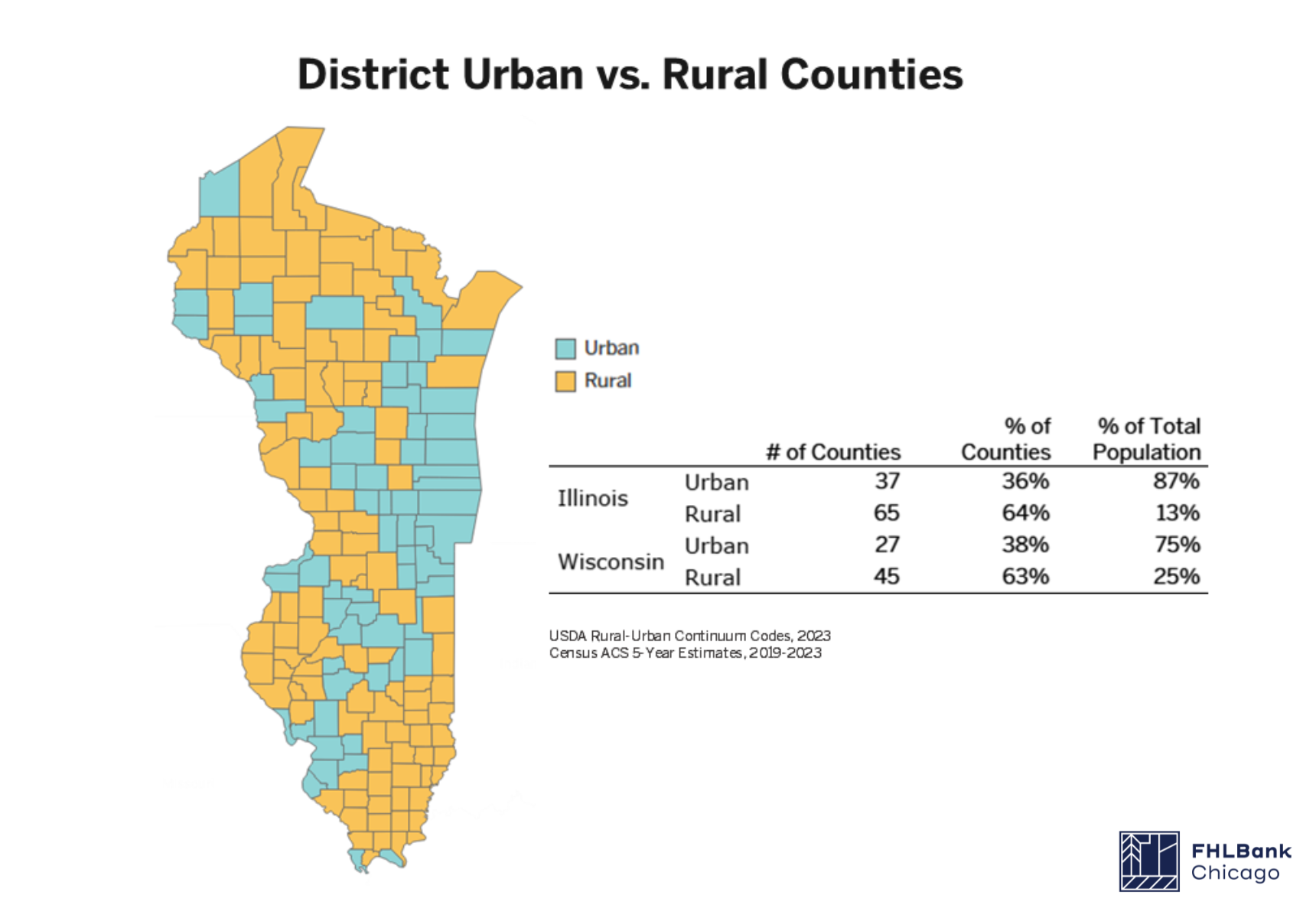
The district’s population comprises over 18 million residents.1 Though the district’s population resides disproportionately in urban areas, the majority of counties in Illinois and Wisconsin are considered rural. While Illinois has sustained population loss over the past decade, Wisconsin has experienced overall population growth.2
1 2024 Census Population and Housing Unit Estimates Tables
2 Census American Community Survey 5-Year estimates, 2014-2023
Economic Trends
The health of the small business sector is an important indicator of the health of local economies. Small businesses are critical to communities as they create jobs, boost economic growth, drive innovation, and generate wealth for business owners and communities alike. As of 2022, there were over 1.8 million small businesses in Illinois and Wisconsin, with over 1.3 million and over 500,000 in Illinois and Wisconsin, respectively.3
3 Statistics of US Businesses (SUSB) Annual Data Tables, 2022; Nonemployer Statistics (NES), 2023; Census ACS 1-Year, 2023
.png?sfvrsn=a58d1912_1)
Owner-Occupied Housing
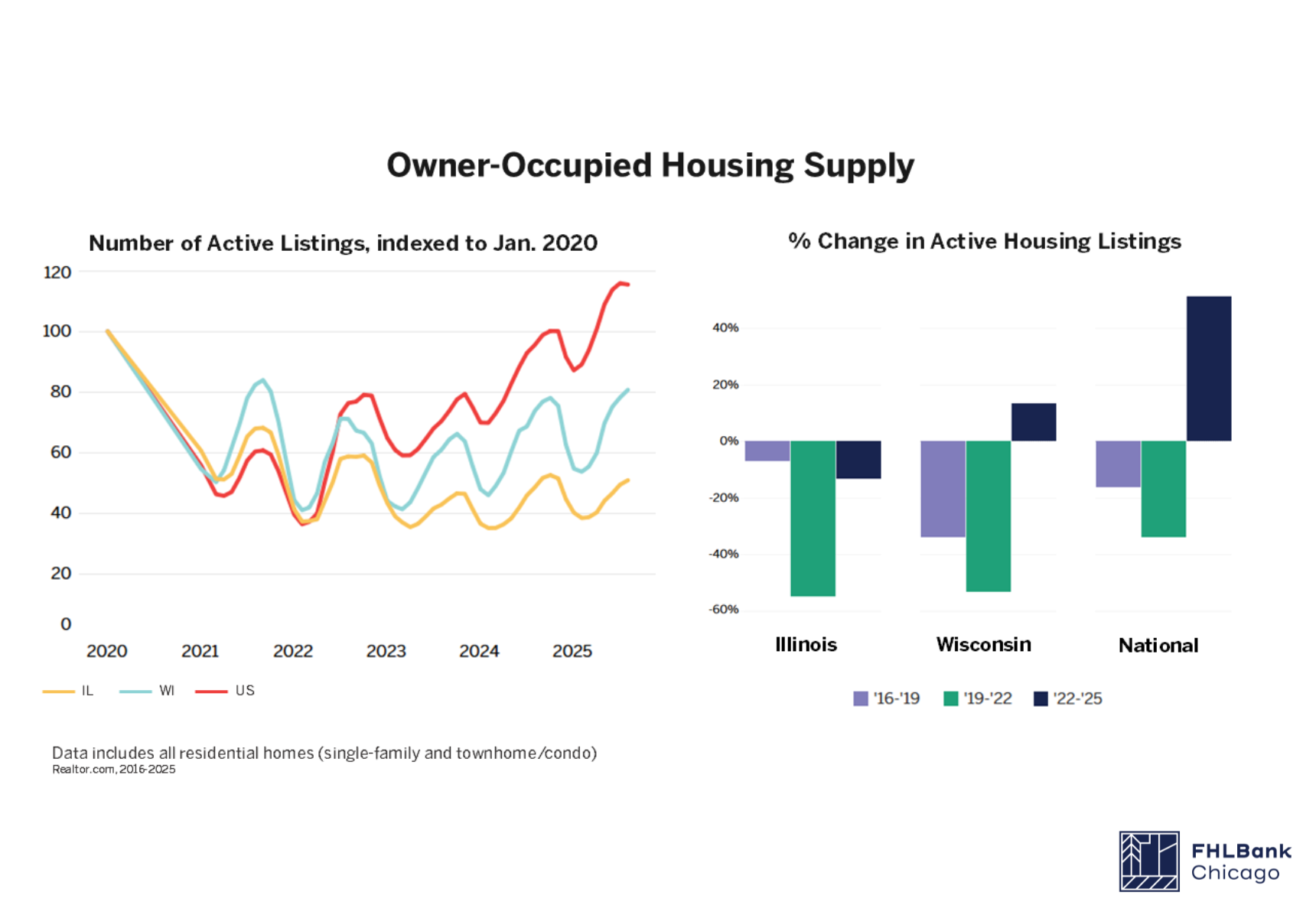
Multi-pronged solutions are needed to facilitate access to affordable homeownership – strategies that both increase owner-occupied housing inventory and bridge the widening homeownership affordability gap for low- and moderate-income households. For homeownership to be a viable option for low- and moderate-income households in the district, current affordability and supply gaps must be bridged.
Shortage of Rental Housing
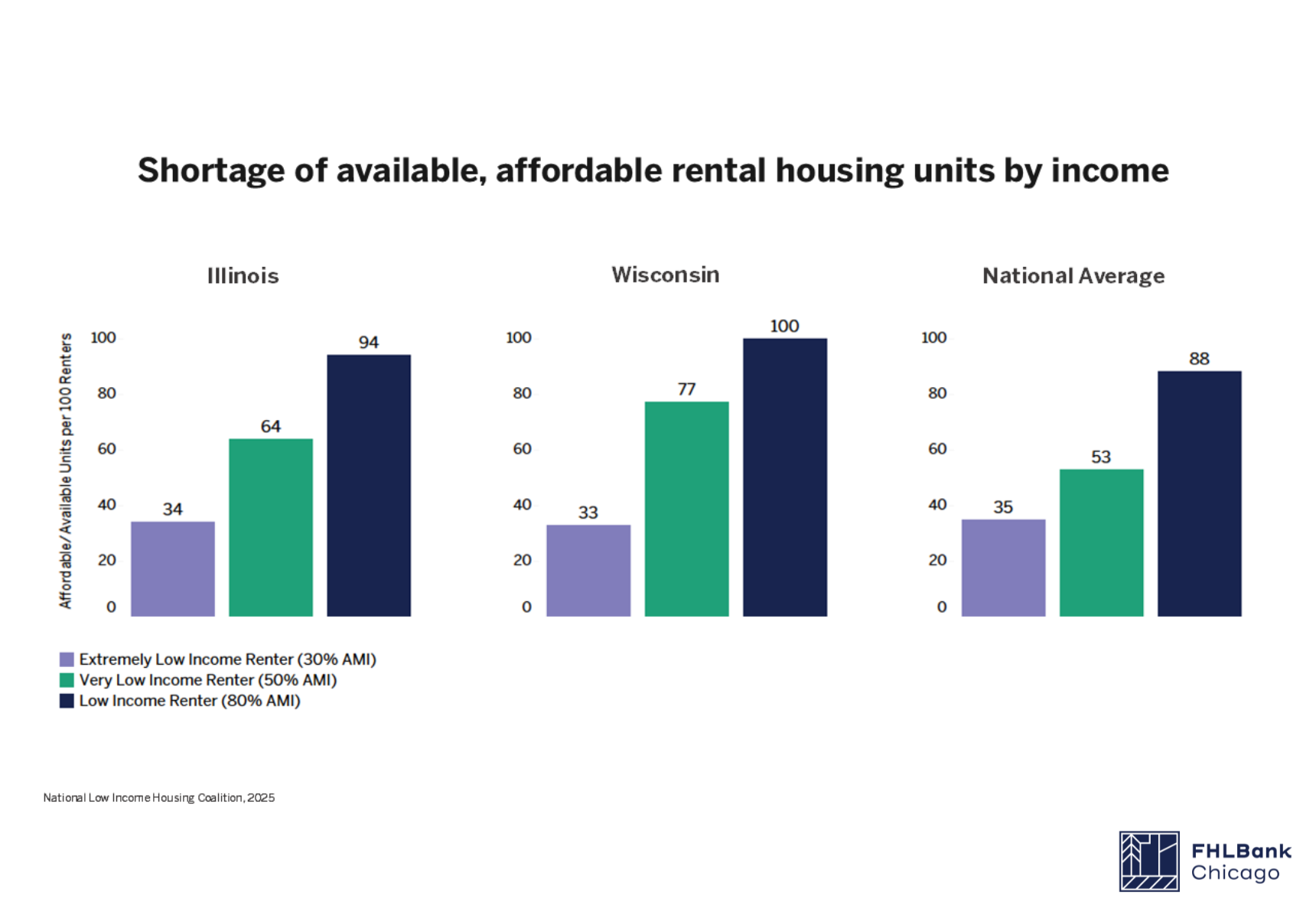
Nationwide, housing cost increases for renters have outpaced income growth over the last two decades.4 Rising rents have been fueled not only by low housing supply, including owner-occupied supply that prevents renters from moving forward on the housing continuum, but also by increases in operating expenses for rental properties, such as rising insurance premiums.
4 Joint Center for Housing Studies, Harvard University, 2025, 2025 State of the Nation’s Housing.

The Research in Action
Our Targeted Community Lending Plan is designed to address the unique needs of local communities. By focusing on strategic partnerships, we aim to enhance access to affordable housing and support economic development.
- Expand the supply of affordable housing in the district
- Build community capacity for affordable housing and economic development
- Catalyze economic opportunities for residents and communities
- Improve housing affordability and homeownership sustainability
- Expand access to capital for housing and economic development